Tuesday, August 11, 2015

Who is the GOAT??

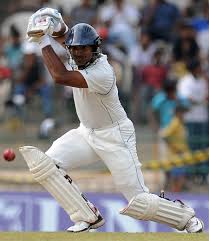
A friend of mine and I were having a discussion around who is the GOAT wicketkeeper-batsman in test cricket. We, however, considered only two batsmen for this. Kumara Sangakkara from Sri Lanka and Adam Gilchrist from Australia. We couldn’t agree on who was better of the two. I was leaning towards Gilly while my friend thought it was Sanga who was better of the two. I decided to take it a step forward and look at the various aspects that can determine who is better. Let us start off with their overall statistics -

Details
Mat
Inns
NO
Runs
HS
Ave
BF
SR
100
50
4s
6s
Ct
St
Gilchrist
96
137
20
5570
204*
47.60
6796
81.95
17
26
677
100
379
37
Sangakkara
132
229
17
12305
319
58.04
22695
54.21
38
52
1479
51
182
20


If one were to consider just the overall statistics, there is no question of who the superior player is. However, what also needs to be considered is that Sangakkara has played more than 60% of his matches as a specialist batsman for Sri Lanka rather than as a Wicketkeeper-batsman. Taking that into consideration, we should look at their records as specialist wicketkeepers -

Details
Mat
Inns
NO
Runs
HS
Ave
BF
SR
100
50
4s
6s
Ct
St
Gilchrist
96
137
20
5570
204*
47.60
6796
81.95
17
26
677
100
379
37
Sangakkara
48
81
4
3117
230
40.48
5988
52.05
7
11
419
9
124
20


Now, this tells us a completely different tale, doesn’t it? Gilly has played all his matches as a wicketkeeper while Sanga has played only 1/3rd of his matches as a wicket-keeper. Gilchrist has a better average (7 runs per innings) and far better strike rate (82 vs 52). Even as a wicketkeeper, Gilchrist has more dismissals per match (4.33 per match) over Sangakkara (3 per match). Even if you look at the absolute number of runs scored by each, and extrapolate Sanga’s to match the number of matches played by Gilli, Sanga would probably have scored more than what Gilli has. But that can be drilled down to the position in which they play. Sanga has primarily batted at number 3 while Gilli at number 7 and this has ensured that Sanga has batted in almost both innings of a test match while Gilli has managed only 1.4 innings per match.

Another aspect that Gilchrist was outstanding at was his ability to build his innings around the tail-enders. 73% of Gilchrist’s innings (100/137) has been at the number 7 position which meant he had to play a lot more with the tail-enders while Sanga played 90% of his innings at number 3 with the top or middle order.


Another disadvantage that Gilli had against Sanga was that he made a late debut (at the age of 28 against 23 for Sanga) and that took off a few good years from his career. Who knows how much better his stats would have looked had he made an early debut! Sanga, without doubt, is a far better batsman, but, if I were a selector of a World XI and wanted a wicket-keeper batsman, I would go with Adam Gilchrist. For me, he is definitely a far better wicketkeeper-batsman! What do you think?

Monday, May 18, 2015

Results Till Now: Nifty Companies See 6% Drop In Revenues as Cement & Oil Players Falter

A little more than 50% of the constituents of Nifty have reported their March quarter results till date, and it isn’t looking good. Revenues are down 6% while profits are down 5% compared to same time last year. Operating profit, which indicates the operational efficiency of the company, was also flat compared to last year. If you think markets are down and are looking for a reason for them to go even further down, you have a good reason now. The fact is, the results of our top companies, the companies that form part of our benchmark index are nothing short of a disaster.

The worst performer has been Vedanta, reporting a 1268% decline in profits compared to last year on the back of a one-off non cash impairment charges.
The Cement sector saw 31% reduction in profits though the revenues did increase marginally by 3%. The operating profits fell by nearly 2% and all cement companies lost over 25% of profits when compared to the previous quarter, ACC lost the most with 41% reduction in profits.
The IT sector saw TCS lose 30% on that big fat bonus payment, but HCL, Wipro and Infosys also barely managed to show some growth in low single digits, even though the sector saw a 9% growth in revenues.
The Financial Services industry saw their profits grow by a paltry 7% primarily on account of the 2 PSBs showing nearly 55% dip in their profits even though the operating profits rise by 20%. Of the companies, IDFC, IndusInd Bank, Kotak Mahindra Bank and Yes Bank grew at over 25% in the same period, but ICICI Bank & HDFC disappointed with a mere 13% & 10% growth in net profit respectively. 
Cairn slipped from a 3,000 cr. profit to a loss in the quarter. The other big oil and gas player, Reliance Industries, saw profits up 8.5% even as revenues declined by a third.
Maruti had impressive results, with a 60% growth in profits while Hero Honda produced an average level of growth at 14%. This ensured that the Automobile sector 45% increase in their operating profits even though their revenues increased only 10%.
Telecom sector had an impressive quarter clocking a growth of 80% in their earnings while revenues increased 14%. Their operational efficiencies increased by a whopping 65%. Bharti Airtel had an unbelievable growth in profits with 86% while Idea Cellular didn’t lag far behind with a growth rate of 60%.
If you add all the profits and revenues of the companies that have announced results so far, we are seeing a 6% and 5% drop in both revenues and profits respectively.
Cairn is the biggest culprit on the profit front, having reversed from profits to losses on oil and the PSBs also contributed to the negative profit growth. Reliance too saw a revenue drop of over 40% for the quarter, contributing primarily to the negative revenue growth. Even if you removed these from the results of the others, revenue increases were only 8% over the previous year, and profits of the rest went up by a meager 6%.
Are these numbers impressive? Hardly! What can be expected of the rest? I would expect more of the same. These numbers are very disappointing and unless the environment changes soon, achche din would be some time away.

Wednesday, March 04, 2015

Mentoring - What should one look for in it??

I am sure all of us see successful people around us. Have you ever stopped by to ask them how they got to where they are? The chances that they will mention about a mentor helping them are very high. What makes mentoring so important? Receiving that investment of time, energy and advice makes mentoring almost priceless. This also means that one should be very careful in choosing a mentor. So, are there any attributes that one should look for in a mentoring program? Here are my thoughts. Do you agree?

Looking for praise alone won’t suffice.
A lot of people are looking for some attention and appreciation when they claim that they want a mentor. They aren’t really looking for constructive feedback which is what would help them work towards growth both personally as well as professionally. To make the most of a mentor, people should look for things that would help build their curiosity and self awareness. This would definitely drive them to perform better.
The more silent, bigger the failure.
If people are to grow, their mentors should be ready to have frank conversations with them. Conversations that are difficult to have and most people would avoid having. A manager can be a mentor too by providing constructive feedback at all times, this would also ensure there are no surprises for the employee during appraisal.

Readiness to accept candid feedback.
A lot of times people don’t like to hear bad things and would love to hear only good things about themselves. But if one wants to make the most of a mentoring relationship, they should be ready to accept candid feedback and understand that it is in their best interests  and therefore be ready to take/accept it.
Building Relationship.
Unless the mentor-mentee build their relationship over a period of time, this wouldn’t work. It can easily get either of them to be disinterested sooner and the meetings would become obligatory. And once it does, there are no benefits to derive for either party. Hence, active listening and empathizing becomes extremely important for the relationship to succeed.
Admiration and Emulation.
While one chooses a mentor, they should never try to align one’s self with someone because of their title. That would be the worst thing to do. Rather, they should look out for someone whom they look up to. That would help them stay focused and make the most of the relationship.

Tuesday, February 10, 2015

Motivation - Just how important is that?

Motivating a person is not easy but is very critical if one wants the person to stay satisfied in their job. Motivation is what leads people to work harder, be more productive and helps in arresting attrition. So, can one think of a single strategy that can magically motivate people and more importantly, keep them motivated throughout? I don’t think there is anything available. Every single person is unique and if one wants to motivate multiple persons, one has to apply multiple strategies.
However, I think there are some themes that can be used and will work with a variety of people. Do let me know what you think
  1. The focus is always on teamwork and it’s benefits nothing ever beats the attention provided to people individually. Taking a moment to speak to an individual alone and personally can make him or her feel truly appreciated. Publicly appreciating their good work and praising them while at the same time spending time with individuals and talking to them about things that matter to them makes them feel very valued. This also ensures that the other people also feel positive about the environment provided to them. More importantly, if someone is under performing, or is overwhelmed by a specific duty, taking them aside and working with them to make the situation better for them is equally appreciated as the person knows that you are behind him/her not only to praise them but also during their tougher times. Individual attention also demonstrates that one cares about the individual behind the work as much as the work itself, and that you're willing to take extra steps to make the individual feel comfortable.
  2. People tend to feel bored when their job becomes repetitive over a period of time. Staying for long in the same position will eventually demotivate everyone. That said, if one is offered opportunities for advancement and improvement, they will lap it up immediately and that will also motivate them to work harder. This doesn’t mean that it should always involve an increment and a new job title, it could also mean offering new training opportunities or offering new responsibilities, especially when one is willing to take them on. Helping people grow and change, one can expect people to remain excited about their job and be highly productive.
  3. People are going to look to their leaders to set an example for the rest of them all. Leaders are required to be setting a tone, a work ethic, and a set of values. Setting the right example can have a meaningful effect on the mentality of your group. For example, if one works hard and stays optimistic about everything, even in the face of enormous challenges, the chances of the employees to do the same are rather high.
People are unique and unpredictable, with individual desires. No matter how much ever one has thought through the plan, it may not please all of them at all times. So it is required to that one be flexible and make changes to the plan along the way to ensure that the team stays motivated. This will ensure that the team is efficient and happy, all the same.

Monday, December 22, 2014

Mistakes - have you made any?

Have you ever made a mistake? If yes, how did you feel once you found it was a mistake? If no, please read the first question again and reply honestly. J My take on mistakes is very simple. Everyone is going to make them. What is most important is for us to learn from our mistakes once we realize our folly.

Mistakes are definitely not the same thing as failure. You make a mistake, you feel bad but rebound having learnt something from the mistake. It wasn’t fun but definitely not the end of the world. But a failure is when you are at a point of no return and completely devasted.

Hence, mistakes are good as you have learned from them and now know what not to do the next time around. Large scale failures are bad (may sometimes lead to failures).

However, there is one thing worse than failures and that is never trying anything new. Many people I know are extremely risk averse. They hate trying something new or different. They are already scared by the outcome that they choose not to go ahead trying. They also end up thinking a lot, a lot more than what is required. By the time they are through thinking and start executing (if at all, they reach that stage), it becomes obsolete.

Such a situation is bad. This just reinstates the fears of the conservatives and further reduces the person’s confidence. That would definitely be the end of any type of trying.

If one has any new ideas, they should just try it out as soon as possible. If not in a big way, at least in a small way. If it works out, expand else it provides an opportunity to re-group and make changes before re-initiating it in a big way. But if one doesn’t try, one would never know!


As John Greenleaf once said – “Of all sad words of tongue and pen, the saddest are these, ‘It might have been.’” After all, no one would like to have any regrets at the end of it all.

Friday, October 17, 2014

Arsene Wenger - No Solace Yet!

It has been 11 games and a win is still elusive. Wenger was hoping for his first win in his 12th game against Mourinho but it was not to be.
The corresponding fixture last season, which was also Wenger’s 1000th match as Arsenal’s manager, ended in a miserable thrashing. Wenger left Stamford Bridge with zero points this time too. Maybe he would take heart that it was not as bad as last year.

At the end of the game, Chelsea were 5 points clear on top and 9 points ahead of Arsenal. The game was also a test of character for Fabregas, who earlier used to play for Arsenal. The Stamford Bridge crowd was fully behind him while the ‘Away’ crowd was booing him throughout the match. The game started off with a lot of physical contact between the players. This, in fact, led Wenger to shove Mourinho in the chest in Chelsea’s technical area after a Gary Cahill challenge on Alexis Sanchez.

A semblance of order was restored although the tension continued to resurface throughout the rest of the game. In fact, it was one of these challenges by Koscienly on Hazard that resulted in a penalty in the first half and led to Chelsea taking a lead to half time. They wrapped up the win with yet another Costa goal from a Fabregas assist (it was Costa’s 9th goal in 7 games) in the 78th minute. The fact that Arsenal didn’t get a shot on goal until the 90th minute suggests how defensive Arsenal were throughout the game.

Chelsea did suffer a loss early in the game when their goalkeeper had an accidental collision with Wilshere and had to taken off in the first half. That did not deter his teammates to excel and close the lid on Arsenal. At the end of the day, Wenger must have been wondering what should he do now to get the better of Mourinho on the pitch….not off it. 

Wednesday, July 23, 2014

Lording over The Lord's

It was anti-climax at the end but then would there have been a better way for it to end? Jadeja bowls to Anderson, who is desperate to get to the other end, takes off for a single that didn’t exist. Jadeja fields and hits the wicket directly while Anderson is still short of the crease. India win! Their first test victory at Lord’s in 28 years. Something that nobody, at least from India, envisaged when they saw the pitch when the test match was to start.

The test match started on the wrong foot with allegations and counter-allegations between the two teams on the spat between Anderson & Jadeja with the latter accusing the former of physically attacking him during the first test. To add on fuel to the fire, the wicket that was prepared for the match was as green as it could be. It was hard to distinguish the ground and the pitch. It got worse for India at the toss with Dhoni losing it and being asked to bat on this wicket.

Cook seems to have stuck gold by sending India to back with 6 wickets down for hardly 125 on the board. It seemed bad when Binny walked back with the score at still less than 150. That is when things started to turn around for India just like in the 1st Test with the lower order taking the fight to the opposition. The last 3 wickets added another 150 runs before they were all out. One batsman who stood out and held together the innings for India was Rahane and rightfully deserved to have his name on the honors board in the Lord’s board for a fantastic century. The bowlers backed up the batsmen well with Bhuvaneshwar Kumar standing out again with his second 5-for in as many tests. He bowled beautifully in perfect English conditions and made the ball talk. He pitched the ball up. He made the ball move away from the right hander and into the left hander. The batsmen were finding it difficult to handle it all. India were able to restrict England’s lead to only 24 runs. England themselves were able to get over 300 thanks largely to a well crafted century by Ballance and late attack by Plunkett.

The Indian openers started the 2nd innings well and had the deficit erased before Dhawan lost his wicket cheaply (how many times has he done this in the recent past!). Pujara and Vijay steadied the ship and took the lead to nearly 100 runs before a lapse of concentration cost India Pujara’s wicket which caused a mini-collapse with India losing 3 wickets for 5 runs. More than ever, India needed its captain and monk to stay in the middle for a long time and take it to safety. They did that to some extent by taking India’s lead to over 175 before Dhoni fell and Binny too soon after. Just when Vijay seemed to be headed to his 2nd century in 2 tests for India, he lost his wicket and India were reeling at 235 with the lead a little over 210. In came Bhuvi and along with Jadeja, turned the game on its head. Their partnership of 99 runs (with both making fifties) not only ensured that the lead was over 300 but also ensured that the bowlers had a lot of time to bowl England out. India were all out for 342 and a lead of 318.

England were set a target of 319 runs on a declining Lord’s wicket. The average 4th innings score at Lord’s was 157. For England to win this one, they had to score more than double the average 4th innings score. With their batting wobbling and India’s bowling doing better, it was a foregone conclusion that India were going to win. The question was when and how? As expected, Jadeja got India the first breakthrough with hardly 12 runs on the board for England. Cook and Ballance resisted for a while before the latter was caught behind. Cook continued doggedly and seemed to be getting back in form when against the run of play, he was back in the pavilion. England were reeling at 72 for 4. It all seemed a formality now for India when day 4 ended.


People were betting that India will close them out before lunch on day 5. But the pair in the middle had a completely different idea. They decided to make India earn this win. They defended the good balls, punished the bad balls. Kept the scoreboard ticking. The number of runs required for a win was less than 150 runs. Indians were beginning to worry. Will this be the turnaround that England was waiting for? Is the Indian team lacking the killer instinct to lose from a winning situation, yet again? The last over before lunch when it looked like it was completely England’s session, Ishant Sharma bowled a bouncer from nowhere and Moeen Ali was caught. All the hard work from Ali and Root meant for nothing. The Indians were back. Neither team took the session ended in a draw as the wicket fell at the stroke of lunch. That was the breakthrough that India needed. It was all over an hour after lunch with Ishant taking a seven for. When the last wicket fell, the Indians were all over the place. Nobody expected this team to draw a match, forget winning one. But this young team beat all odds to win and take the lead in this series. With 3 more games to go, I wonder what further twists and turns await us. Test matches are better story tellers than anyone else. Wouldn’t you agree?

Monday, July 30, 2012

How to recognize a Toolophile from a Power–Point Maestro


Process excellence professionals come in a variety of shapes and sizes, says PEX Advisor Debashis Sarkar. Here how’s to recognize them and how you can make sure you use their strengths to your advantage.
Whether they’re experts in improvement methodologies like Lean, Six Sigma, TOC, or not, what binds PEX (aka Process Excellence) professionals together is that they use the power of process to enhance the performance of their organizations. But it’s definitely not “one size fits all”. It takes all types to make a PEX team and it’s helpful to know who is best at what.

Here are the 15 types of PEX professionals you’re likely to encounter on the job.

#1: The Tool-o-phile
The Tool-O-Phile is a person who loves tools and spends a lot of time gathering knowledge on tools and techniques from methodologies such as Lean, Six Sigma, TOC, A3 etc.  For this type PEX professional, brandishing capability on lean tool is more important than the outcomes of process improvements.  One to watch as you can often find him or her using tools in projects even if not required- just to demonstrate knowledge of the methodology.

#2: JDI Pusher
JDI stands for Just-do-it. This type of PEX professional is a person who will provide you the solutions even before complete analysis to a problem has been done. He will encourage teams to avoid the rigour of analysis and just go ahead with the deployment of the solutions (usually recommended by him or her). The JDI Pusher takes it personally if their solution is not implemented.  You can recognize this type of PEX professional because they have a tendency to narrate stories about past successes and process knowledge – especially in support of his solution. The challenge? If he is not able to push his idea, he will withdraw and stop participating in the process improvements.
The JDI Pusher is driven to push his solution through. But watch out if his idea isn't selected.

# 3: The “Know-All”
The “Know-All” claims to have knowledge about all methodologies and tools that exist for process excellence. Be it Six Sigma, Lean, TOC, TRIZ, process management, CMMI, COPC etc; he will claim his competencies in all and will have a line or two say on each of them.  Whichever one you name, he will nod his head as if he has successfully used it for years.  You can easily recognize this type because when told to demonstrate his knowledge by implementation, he will struggle.

#4: The Change Master
The Change Master treats every process improvement initiative as a change endeavour. He is strong in influencing skills and is able to engage teams across hierarchies. He is tool deficient as believes that they are not important so far he is able to manage the trials and tribulations of change associated with process excellence efforts.

# 5: The Power-Point (PPT) Maestro
The PPT Maestro is a person who gets all his power from power-point. His passion is not process-improvement and his involvement at the most is superficial. However, he is in the forefront in leading the encapsulation of the project outcomes in power-point presentations and sharing this with the bosses.


# 6: The Thinker
He is a thinker and loves conceptualizing the process-improvement journey. You put him in any organization and he will quickly tell you what needs to be done to enhance its performance. However, his forte is not execution and needs others to deploy what he was conceptualized .   He observes and learns from across industry and successfully able to customize offerings for his organization.  

#7: The Communicator
He is an individual who likes communicating to all the power of process and what it can do to business performance. He loves evangelizing and sharing concepts of quality. His forte is collecting relevant information and disseminating it to all relevant organization.  But clearly deployment, change and engagement are not his cup of tea.

#8: Data Whiz
This is someone who loves data and spends a lot of time playing with it. You give him any information and he would quickly analyse for your reference. He is adept in statistical tools, software packages such as Minitab, JMP etc.

#9: The Systems Thinker
The Systems Thinker is able to quickly connect the impact of process improvement efforts on the big-picture of the organization. Being a systems thinker he is able to quickly tell you how an improvement impacts the other parts of the organization. However, he has dislike for tactical work and would avoid being a part of it 

#10: The Deployment Champ
This is someone who is passionate about deployment and able to execute projects on time because of solid project management skills. He gets kick from actions and loves putting out organizational “fires” through process tools. However, if you tell him to think, you may be a bit disappointed with the outcomes.

#11: The Advisor
This is an individual who loves to advise teams on how improvements can be carried out but if you tell him to lead deployment, you could be disappointed. He believes in arm-chair consulting and likes being a bystander when deployment gets done.  He is willing to take accountability of results so far as someone else would do the actual work for him.   

#12: Trainer
He likes to build capability of teams and is passionate about created agents of change who can do process improvements. He loves training people and gets all charged up when he has to teach a set of people in a classroom. Out of a classroom he’s  like a fish out of water.

#13: The Fixer
The Fixer’s approach to process excellence is by short-cuts and building opportunistic relationships with people . You will find him less in process related work and more in finding out about organizational politics. From his friendly demeanour you will never able to realize that he has some motives to achieve. Since his process related efforts are superficial the outcomes that his improvements deliver are most of the times ineffective.    

#14: The Chronicler
The Chronicler loves to study process excellence pursued by organization or individuals  and  chronicle them for others. He studies & researches organizations, practices and teams; and understands why they are doing what they are doing. He puts his findings in articles or books for others to read and learn. 

#15: The Silent Force
He is a quiet individual who talks less and wants his results of process improvement do the talking. His knowledge and ability to deliver results is valued by those around him. Typically his silence is mistaken for incompetence but when he is in working on a project one can see a craftsman in action.

Most individuals will have a mix of many of the above traits but they will tend to fall into one category or another.

Which one are you part of??

Monday, July 16, 2012

Woman & the Respect She Deserves


The whole of Twitter has been outraging about the molestation incident that happened earlier this week outside a bar in Guwahati. The girl was molested by 20+guys after she confronted them when they abused her inside the bar. It has pained me and it still is that we mistreat women thus!

This made me wonder about how much we actually respect women in our country. Do we really appreciate her contribution in our lives, to our society and our country? What makes us from appreciating them? Who is responsible for this? Where does one go to search for these answers?
Ours is primarily a patriarchal society where the man is the all powerful gender and the woman is expected to be submissive & always listen to him. This has been the case for centuries and, honestly, not something that we should be proud of. Why? Because we are a society where majority of us believe in woman to be a goddess. We pray to our goddesses and believe they are our saviors in most times. So, despite this why do we still continue to be sexists or misogynists?

Why do men in India find it difficult to accept that women are as good and capable as themselves? Women deserve as much freedom to do things as every man does. She deserves the respect that every man does. Why do men disrespect her by physically abusing her?

Can’t we respect and revere a woman when she manages to do so many things and yet be strong? Can’t we accept that women can be independent too and love them for that? Can’t we celebrate a woman like we do our own mother, sister, wife & daughter?

We would turn a great country only when we realise and respect women. Till the time we continue to ill-treat our women by physically and mentally torturing them, we would continue to be this third-rate country which doesn’t know to how to respect its women.

No, I am not a feminist! I am just someone who loves to treat everyone equally and not discriminate based on gender/caste/creed. I hope I live long enough to see my country change into something I am wishing for.

Wednesday, July 11, 2012

The Olympic Games that I am most excited about


My first memory of Olympics was in the year 1988. I was 9 years old then and was excited at watching so many games happening simultaneously. I was equally excited at watching it live on TV. The next memory I have of Olympics is 1996 when I saw a teary eyed Leander on the podium after clinching a Bronze medal in Men’s singles Tennis, ending our medal drought. The last medal India had won before that was in the 1980 Moscow games. Since then, we have been consistently winning only 1 medal every Olympics except 2008 when we won 3. In fact, India has won only a total of 20 medals in all the Olympics it has participated since 1900. It is, indeed, a shame that a country with over a Billion people and so many resources at its disposal has won so little at the Olympics. So, what is it about London 2012 that excites me?

First and foremost, I think this is India’s best chance of coming back with its biggest haul of medals in its Olympic history. And India has athletes from different fields that are capable of winning a medal. Our best performance till date was at Beijing 4 years back when we won a rich haul of 3 medals (1 Gold & 2 Bronze) from Shooting, Wrestling and Boxing events. This time around we have medal hopes from many other events like Badminton, Tennis, Archery, Shooting, Wrestling, Boxing and Hockey.

Secondly, this year’s Olympics would be held in London. This city, to me, is the most beautiful city in the world with a lot of history, culture and traditions. The open spaces, the parks, the people. It is absolutely lovely there. I have been there once in the past and how I wish that I would get another chance to go there.

Finally & equally importantly, the spirit of Olympics and sports. It is always lovely to watch sportspersons from different nations keep their animosities behind and come together to play the sport in the best spirit. This is a place where friendships are formed, partnerships are made and more importantly, humanity realised.

I would love to be part of at least 1 Olympic games in my life to see them all first hand and share my experiences with my grandchildren. Will it happen? Only time will tell. Till such time, all I want to do is look forward to this year’s games and see my beloved country come back with its richest haul ever and the games being held in the best spirit.

Tuesday, July 10, 2012

A year later - I am back

My last time I wrote was in 2011 and I had hoped to continue blogging which didn't happen. I am back again. Will I last?? That is the big question. I will definitely try my best to continue blogging... I hope I get the power to do it... Will start with Olympics and hopefully tomorrow. :)